
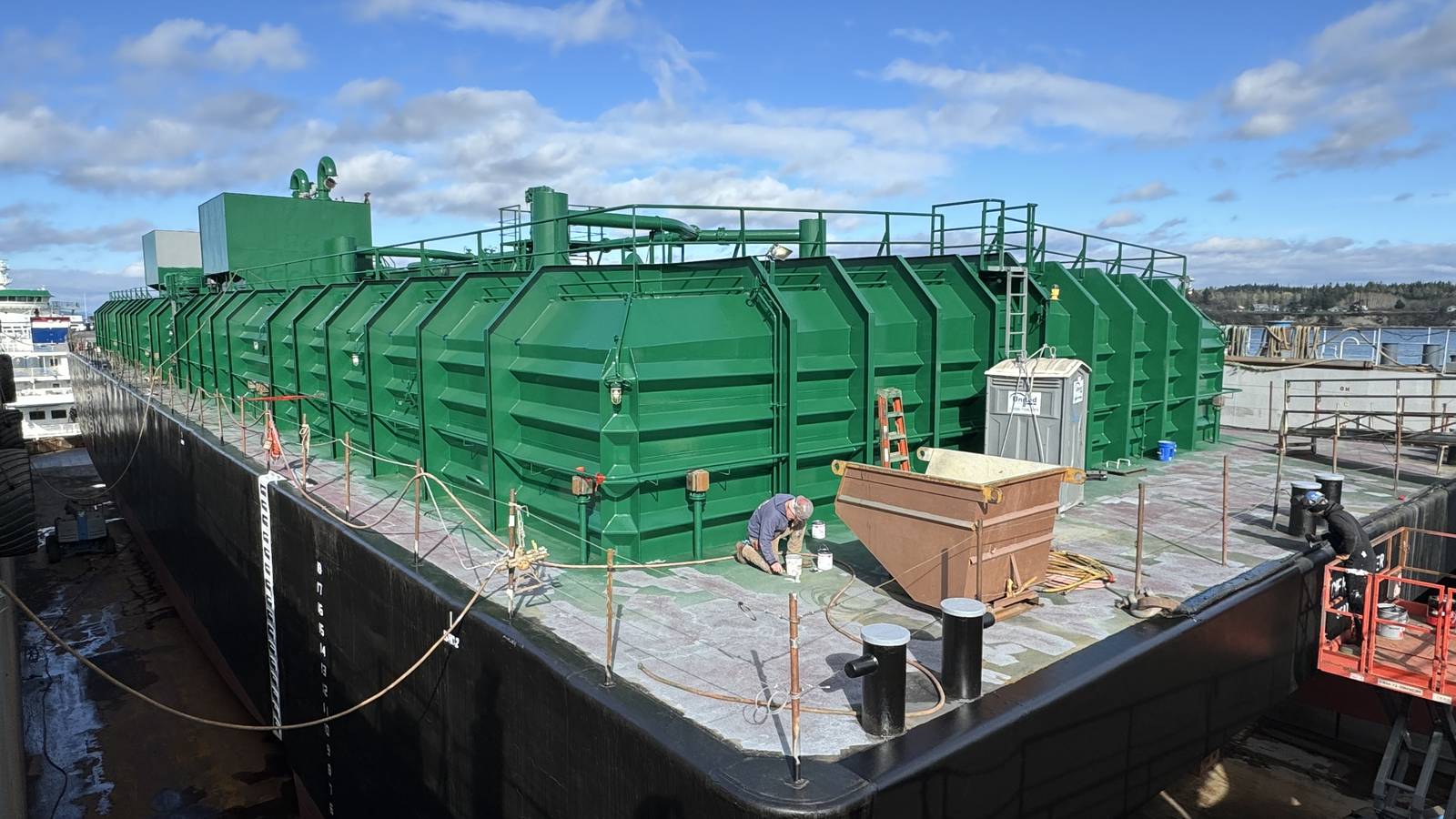
Chalking, fading, and staining often show up before corrosion does. Why vessel appearance is a leading indicator of coating health and maintenance cost.
Chalking, color change, gloss loss and rust staining usually appear before serious corrosion does, which makes vessel appearance one of the earliest and least expensive measures of coating health.
For vessel owners, operators, port engineers and fleet managers, the condition of topsides, superstructures and decks drives both maintenance cost and how the vessel is perceived. Appearance changes that are rated and tracked can show when to act while repairs are still small.
This article covers what each appearance change means, how to rate it with recognized ASTM methods and how to turn those observations into a maintenance plan.
What Does Coating Appearance Reveal About Condition?
On most vessels, the topside coating shows it is aging well before the steel underneath is in trouble. Chalking, color change, gloss loss and rust staining are early signs that can be measured, recorded and compared over time.
Owners who treat appearance as condition data can plan maintenance while it is still a cleaning, touch-up or overcoat job. Waiting for visible corrosion often turns the same work into spot blasting or full removal.
The Topcoat: Why Trouble Shows There First
The finish coat faces sunlight, salt spray, wash water and abrasion. As its binder breaks down under ultraviolet exposure, pigment loosens at the surface and the film loses gloss, shifts in color and forms a powdery chalk.
The film also erodes slowly, which reduces the barrier protecting the primer and steel below. Different chemistries age at different rates:
- Epoxies: Excellent primers and intermediates, but they chalk and change color quickly in direct sun, which is why they are finished with a UV-stable topcoat.
- Aliphatic Polyurethanes: Common topside finishes chosen for color and gloss retention.
- Fluoropolymers: Specified where the longest color and gloss retention is the priority.
The HPC articles UV Resistant Epoxy? and Fluoropolymers or Polyurethanes: Making the Best Choice cover the chemistry.

Chalking: Rating Surface Erosion
Visual impressions vary from one inspector to the next, so standard methods make readings comparable over time and between vessels. Chalking is rated by the test methods for evaluating the degree of chalking of exterior paint films (ASTM D4214, current edition D4214-23).
Chalk is picked up on fabric, a fingertip or adhesive tape and compared to photographic references or, for tape, a reflectance table. Worsening chalk ratings over successive inspections indicate the finish is eroding.
Heavy chalk also needs to be removed before any overcoat. Otherwise the new coat bonds to the powder rather than to the sound film beneath it.
Color and Gloss: Measuring Finish Aging
Fading can be judged visually against a retained sample, but instrument readings are more useful for trending. Color difference calculated from instrument measurements (ASTM D2244) is reported as delta E, and a baseline at delivery or after a yard period gives later readings a reference.
Gloss is measured with a glossmeter under the test method for specular gloss (ASTM D523). Gloss usually drops before visible chalking appears, so it is one of the earliest measurable signs of finish aging, and readings should be taken at the same locations and geometry each time.
Rust Staining: Separating Runoff From Rust-Through
Rust staining needs interpretation. Streaks running from fittings, fasteners, chocks or deck hardware may come from corroding hardware rather than failed coating on the plate, while rust breaking through the film signals coating breakdown.
The practice for evaluating degree of rusting on painted steel surfaces (ASTM D610, current edition D610-25) provides the rating framework:
- Rust Grade: A scale of 10 (least rust) to 0 based on the percentage of the surface rusted.
- Distribution: Classified as spot, general, pinpoint or hybrid rusting.
- Visual References: Developed in cooperation with SSPC to standardize ratings.
Related methods include blistering (ASTM D714), checking (ASTM D660) and cracking (ASTM D661).
Inspection Priorities: Where to Look First on a Vessel
Coating breakdown on topsides typically starts in predictable places:
- Edges and Welds: Seams, cutouts and corners where film build is thinnest.
- Hardware: Fasteners, deck fittings, chocks and dissimilar metals.
- Drainage Areas: Bulwarks, scuppers and areas where water stands or drains slowly.
- Chafe Points: Contact with lines, chain, fenders and cargo handling equipment.
- Sun-Facing Surfaces: Superstructure and house surfaces with the highest UV exposure.
- Splash Zone and Boot Top: Constant wetting and drying cycles.
Maintenance Planning: Turning Observations Into Action
Appearance data is most useful when it is collected the same way every time. A practical routine follows these steps:
- Record a baseline after new construction or a yard period: gloss, color and dry film thickness readings at marked locations, plus photographs.
- Inspect on a regular interval tied to the operating schedule, using the same locations, camera angles and methods.
- Rate chalking (ASTM D4214) and rusting (ASTM D610), and note blistering, cracking and mechanical damage.
- Trend the results. Declining gloss and worsening chalk with no rust usually point to cleaning and topcoat renewal, isolated rust points to spot repair, and widespread rust with poor adhesion points toward larger repairs.
- Confirm with testing before committing to overcoating. The HPC article Overcoating Versus Complete Removal: Making the Right Choice explains how rust grade and adhesion guide that decision.
Appearance also has a commercial side. Passengers, charter customers, inspectors and the public see the topsides, and a faded, rust-streaked vessel affects how an operator is perceived regardless of its mechanical condition.
The HPC article A Vessel Owner's Guide to Marine Coating Performance covers selection and life-cycle factors. Underwater hull protection is covered in Tnemec's HullClad.
Tnemec Options: Topside Finishes
For topside renewal, Tnemec Series 1090 Endura-Shield is an aliphatic acrylic polyurethane finish.
Where long-term color and gloss retention is the priority, Tnemec Series 1071V Fluoronar is an advanced thermoset solution fluoropolymer finish.
Conclusion
Appearance is the most visible and least expensive coating data an operator can collect. Rated consistently with ASTM D4214 and ASTM D610 and paired with gloss and color readings, it shows when a finish is aging and where corrosion is beginning. We recommend a documented inspection routine for every vessel so maintenance can be scheduled around the operating calendar.
A coating that is watched closely is far less likely to fail by surprise.
Field Verification Before Specifying
The following conditions are to be confirmed in the field with the applicable test before a system is finalized:
- Degree of chalking (ASTM D4214) at marked locations.
- Degree of rusting and distribution (ASTM D610, with SSPC visual references).
- Blistering (ASTM D714), checking (ASTM D660) and cracking (ASTM D661).
- Specular gloss (ASTM D523) and color difference (ASTM D2244) against baseline readings.
- Existing dry film thickness (SSPC-PA 2 with ASTM D7091 gauges).
- Adhesion of the existing system before overcoating (ASTM D4541 pull-off or ASTM D3359 tape method).
- Soluble salts on prepared steel before recoating (SSPC Guide 15 methods).
- Existing coatings for hazardous materials such as lead or organotin compounds, by laboratory analysis.
We are happy to help. Contact a High Performance Coating Consultant in your region to review your vessel's coating condition and maintenance plan.
Verify all product designations, coats, dry film thicknesses and surface preparation requirements with Atlantic Coating Consultants or Tnemec Company before issuing for bid or construction.
What is ASTM D4547 (QUV Exposure) Testing and Why...
ASTM D4587 (QUV Exposure) refers to a specific...
Unsightly efflorescence: What is it and how is it...
The visible collection of crystalline salt on the...
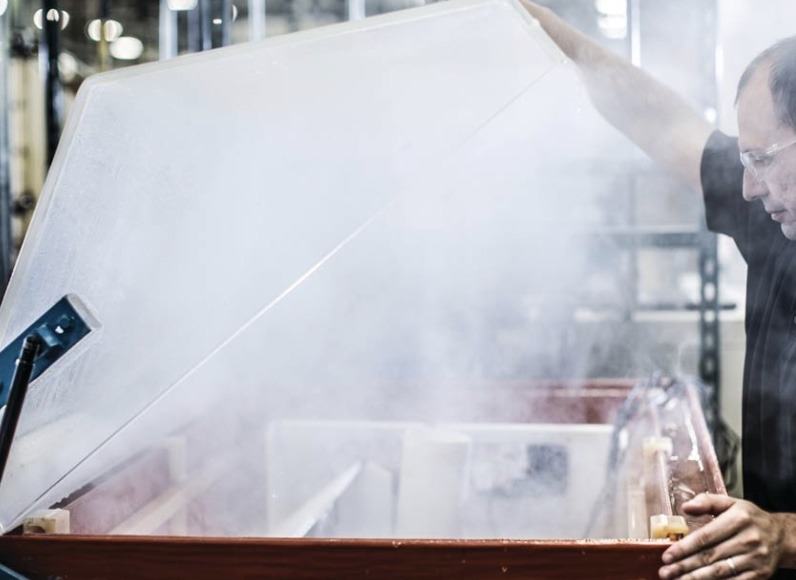
What is ASTM B117 (Salt Fog) Testing and Why is...
What is ASTM B117 Salt Fog Testing?
ASTM B117...