
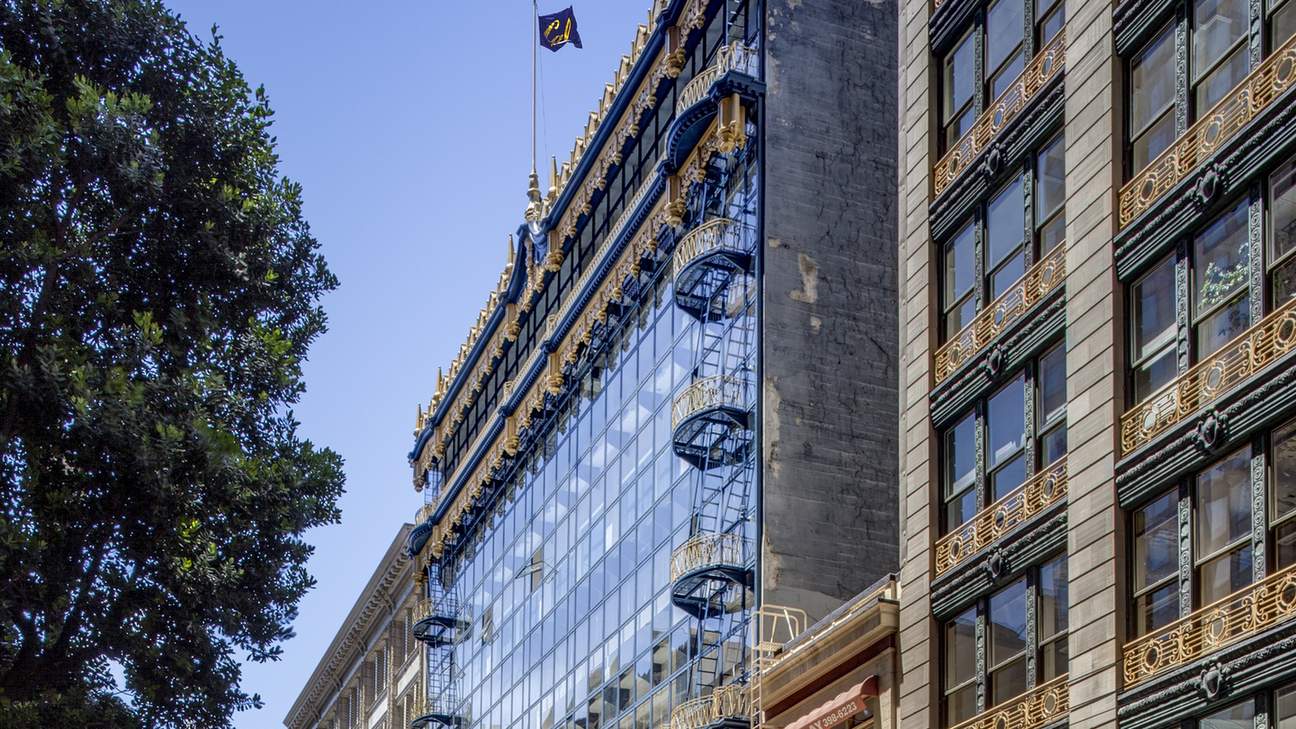
Sun, rain, and thermal swings punish exterior surfaces. The coating systems and specification steps that protect concrete, steel, and masonry for the long haul.
Concrete, masonry and exposed steel each respond differently to sun, rain and thermal swings, so durable exterior protection starts with matching the coating approach to the substrate.
For architects, specifiers and owners of commercial, institutional and municipal buildings, exterior coatings carry both the appearance of the building and the protection of its structure. A system chosen for color alone, or applied without regard to how the substrate handles water, often fails at the first weak point.
This article covers what exterior exposure does to coatings and the protection approaches to evaluate for concrete, masonry, stucco and exposed structural steel.
What Does Exterior Exposure Do to Coatings?
Exterior surfaces face several stresses at once, and each one attacks a coating differently. The main exposure factors are:
- Ultraviolet Light: Breaks down binders at the surface, which shows up as chalking, fading and gloss loss.
- Wind-Driven Rain and Freeze-Thaw: Force water into porous substrates, cracks and failed joints.
- Thermal Cycling: Makes substrates expand and contract daily and seasonally, stressing rigid films and sealant joints.
- Alkalinity: Concrete and mortar are alkaline, and some coatings soften or lose adhesion on alkaline surfaces.
- Salts: Soluble salts, efflorescence and coastal chlorides attack from within the substrate and from the air.
The general rule follows from these stresses. Concrete and masonry generally need systems that shed liquid water while letting water vapor escape, and exposed steel needs a corrosion-resistant barrier system finished with a coating that resists ultraviolet light.
Concrete and Precast: Repellents, Coatings and Crack-Bridging Films
Exterior concrete has three common protection approaches, and they are not interchangeable:
- Penetrating Water Repellents: Typically silane or siloxane blends that soak into the surface, reduce water absorption without forming a film and preserve the natural appearance.
- Film-Forming Acrylic Coatings: Add color and a protective film while remaining breathable.
- Flexible High-Build Coatings: Bridge hairline cracks and resist wind-driven rain, which suits older concrete with minor cracking.
Preparation drives the result. Spalls, exposed reinforcing and active cracks are recommended for repair before coating, and the surface is prepared to the profile the system requires, described by the concrete surface profiles of ICRI 310.2R (CSP).
Moisture and alkalinity are the other two concerns. A coating applied over damp or highly alkaline concrete is at risk of blistering or adhesion loss, so these conditions are verified in the field before coating rather than assumed.
Masonry, Brick and Stucco: Managing Water Without Trapping It
Masonry is porous by design and moves water through the wall. Coatings and repellents for masonry are therefore selected to manage water without trapping it.
Typical approaches by substrate include:
- Brick and Architectural Block: A penetrating water repellent is often the first option where the owner wants to keep the natural appearance.
- Painted Concrete Masonry Units: A block filler fills the open texture before finish coats, and split-face or split-fluted units need extra attention to coverage.
- Aged Stucco: A flexible, breathable coating can renew appearance and bridge minor hairline cracks.
The HPC article Revitalize Old Stucco with Tnemec Series 156 covers stucco renewal in more detail.
Efflorescence on masonry is a symptom of water moving through the wall. The source, such as failed sealant joints, missing flashing or rising damp, is recommended for correction before coating, or the new system will be fighting the same water.
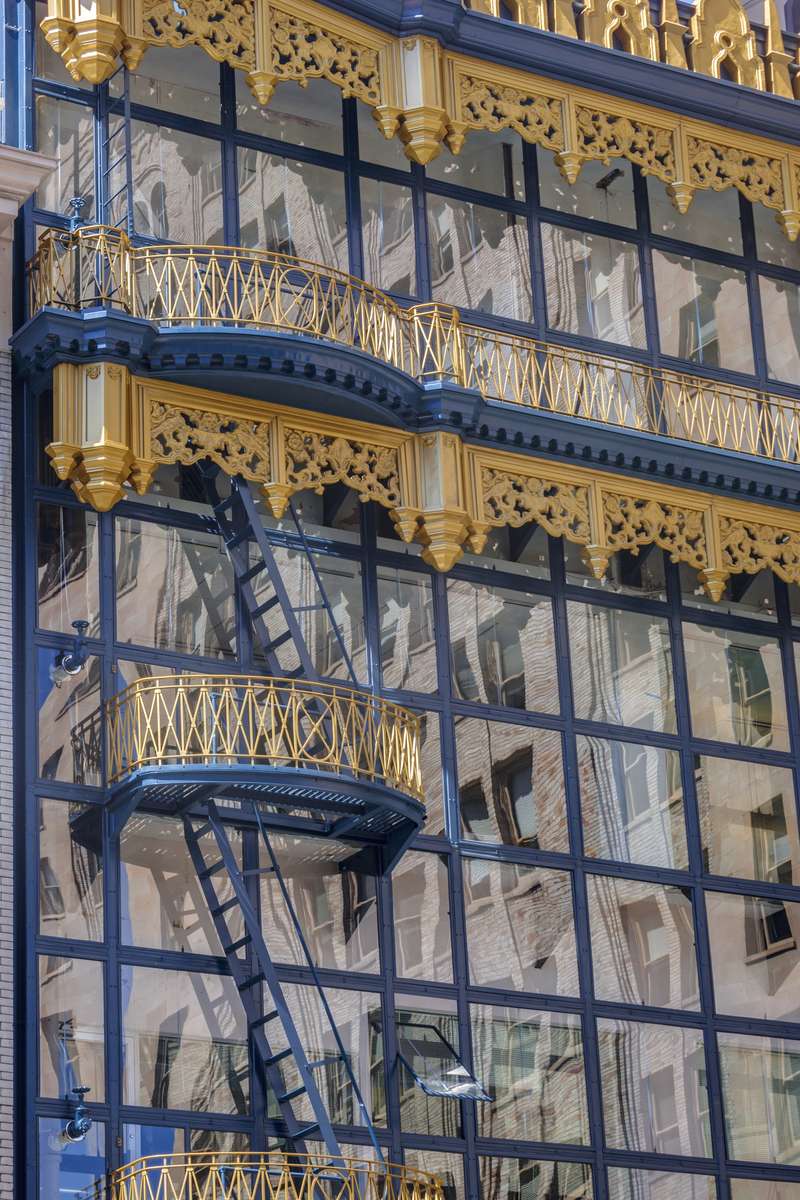
Exposed Structural Steel: Barrier Systems With UV-Stable Finishes
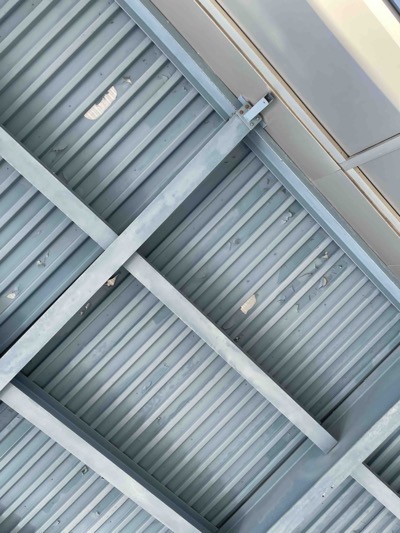
Exterior steel on canopies, entrances, stairs and architecturally exposed structures is commonly protected with a multi-coat system. A zinc-rich primer provides corrosion protection, an epoxy intermediate adds barrier and build, and a UV-stable finish such as an aliphatic polyurethane or a fluoropolymer holds color and gloss.
The HPC article Fluoropolymers or Polyurethanes: Making the Best Choice explains the finish decision. Preparation requirements typically include:
- Blast Cleaning: Near-white metal blast cleaning (SSPC-SP 10/NACE No. 2) or commercial blast cleaning (SSPC-SP 6/NACE No. 3), depending on the system and exposure.
- Galvanized Steel: Brush-off blast cleaning of galvanized steel (SSPC-SP 16) and a primer suited to galvanizing.
- Details: Stripe coats at edges, welds, bolted connections and areas where water collects, because corrosion usually starts there.
For steel that is shop-primed and field-finished, the HPC article What Are The Proper Methods for Touching Up High Performance Coatings? addresses repairs after erection.
Coated aluminum curtain wall and panels are typically specified to the architectural finish standard AAMA 2605, explained in Understanding AAMA 2605 Standards for High Performance Coatings. Where field-applied steel finishes must match adjacent factory-finished aluminum, color and gloss targets are best coordinated early.
Specifying for the Long Haul: Mockups, Data and Access
A few specification habits make a measurable difference on exterior work:
- Mockups: Require a field mockup on each substrate so the owner approves color, sheen and texture before production.
- Comparable Data: Compare finishes on weathering data from the same method and duration, such as fluorescent UV-condensation exposure (ASTM D4587).
- Color Selection: As a general observation, deep and bright colors tend to show fading sooner than neutral colors in the same chemistry.
- Maintenance Access: Surfaces that are difficult to reach later justify a higher-performance finish now.
- Inspection Records: Specify inspection points for preparation, film build and cure, and keep the records for future maintenance planning
Conclusion
Exterior coatings last when the system respects how each substrate handles water, movement and sunlight. We recommend field verification of substrate condition, a mockup on each substrate and documented inspection as the most dependable ways to turn a good specification into a durable exterior.
The condition of the substrate before coating decides much of what the coating can do afterward.
Field Verification Before Specifying
The following conditions are to be confirmed in the field with the applicable test before a system is finalized:
- Concrete and masonry moisture before coating (ASTM D4263 plastic sheet method, or as the product data sheet requires).
- Concrete surface pH and alkalinity where film-forming coatings are specified.
- Concrete surface profile (ICRI 310.2R CSP chips) against the system requirement.
- Adhesion of coatings to concrete and masonry (ASTM D7234) and to steel (ASTM D4541), including on mockups.
- Existing coatings and sealants for hazardous materials such as lead or PCBs, by laboratory analysis.
- Existing coating condition and dry film thickness on steel (SSPC-PA 2 with ASTM D7091) before overcoating.
- Soluble salts and efflorescence sources, including sealant joints, flashing and drainage.
- Crack width and movement, to separate hairline cracks a coating can bridge from cracks needing repair or sealant.
We are happy to help. Contact a High Performance Coating Consultant in your region to review your building's exterior conditions and specification.
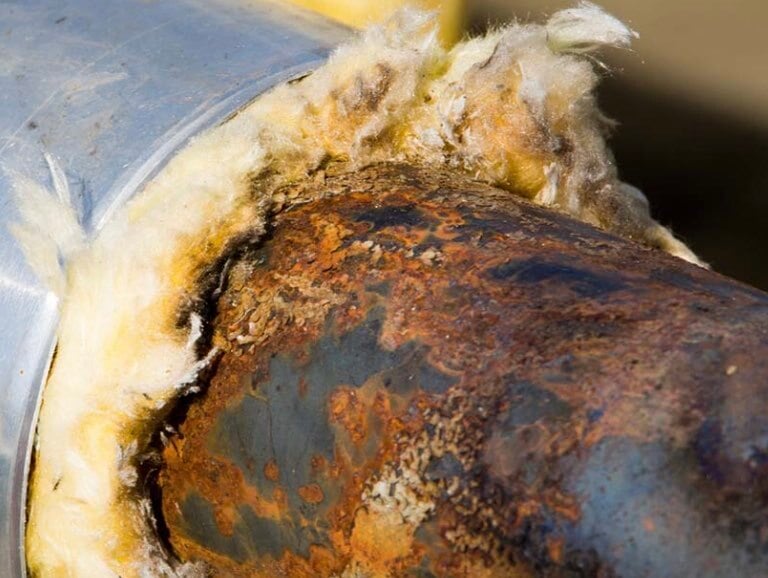
Understanding Corrosion Under Insulation (CUI)...
This hidden threat silently degrades piping and...
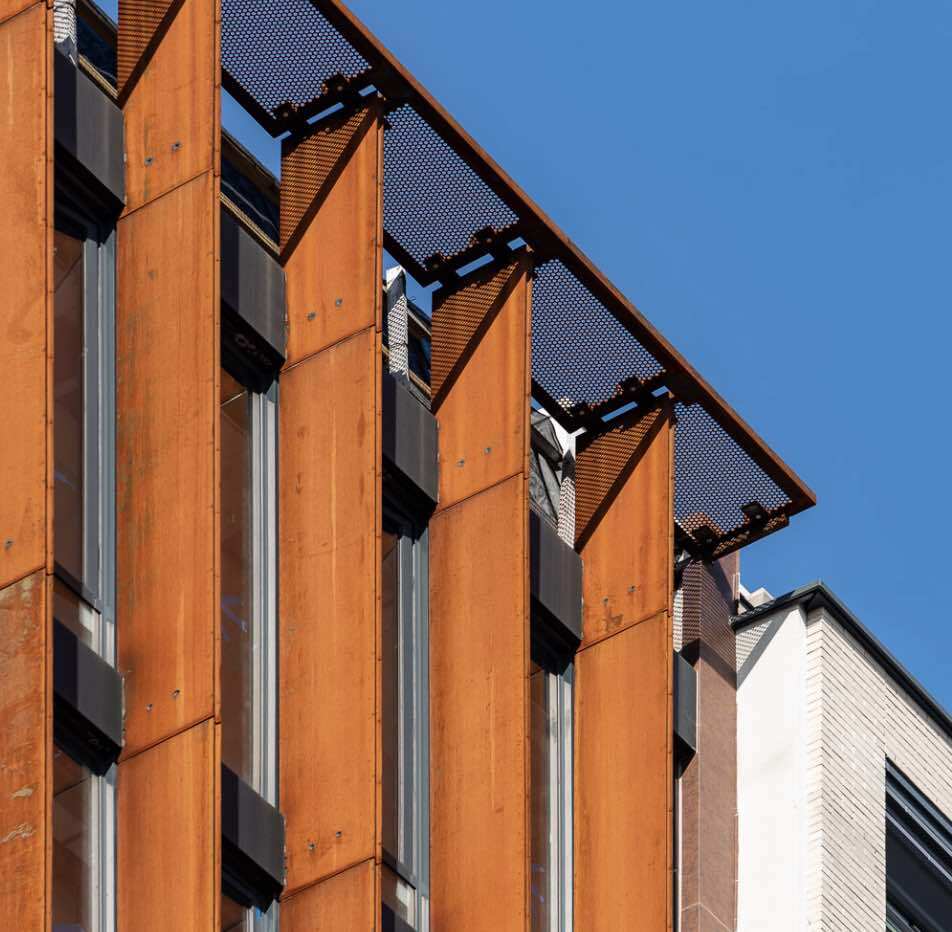
Corten Steel: Essential Guide to Surface...
Corten steel is otherwise known as weathering...
Can galvanized steel be coated?
What is Passivation on Galvanized Steel and Can...