
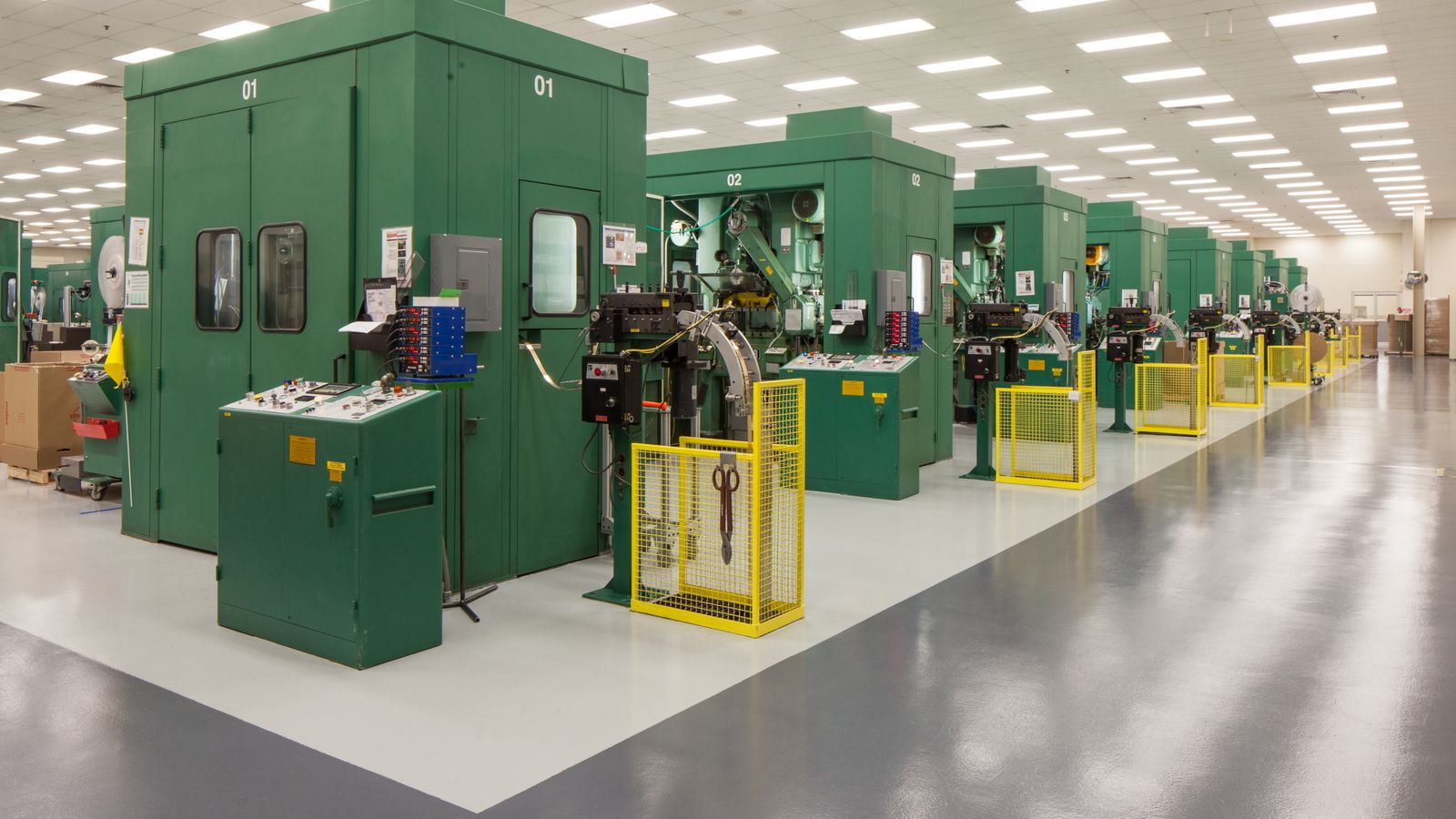
A floor fails as a system, not a product. Why specifying primer, body coat and topcoat as one tested system protects owners and installers on every project.
Resinous floors rarely fail inside a layer, which is why the specification should cover one tested system from one manufacturer rather than a list of products.
For architects, engineers and owners who write or approve Division 09 floor specifications, the most consequential choice is often not which product to use. It is whether the floor is specified as one tested system or assembled from individual products that were never qualified together.
This article covers why floors fail between layers, what a system specification includes, how substitutions break systems and what owners gain from single-source responsibility. For the broader challenge of choosing performance criteria, see Why Specifying Floor Coating Projects Is Difficult.
What Is a Resinous Floor System?
A resinous floor system is the full assembly installed over the slab. It typically includes a primer, one or more body coats, broadcast aggregate, a grout coat, a topcoat, integral cove base and the patching and crack repair materials beneath them.
Each layer has a job, and each one depends on the layer below it for bond. The system is only as reliable as the weakest interface between those layers.
Interface Failures: Why Floors Fail Between the Layers
Floors rarely fail in the middle of a layer. Field investigations far more often trace the problem to an interface, such as a bond line between coats, a patch or a termination (an observation from field experience rather than a measured statistic).
Common interface problems include:
- Incompatible Topcoat: A topcoat applied over a body coat it was not formulated to bond to, or outside the recoat window of the coat below.
- Wrong Primer: A primer chosen for speed or price that lacks the moisture tolerance or penetration the slab needed.
- Incompatible Patching: Repair materials that shrink, cure differently or do not bond to the primer above them.
- Wrong Aggregate: Broadcast aggregate of the wrong type or gradation, which changes the build and the grout coat required.
Each of these can pass a quick look at installation and appear months later as delamination, blistering, cracking or discoloration. The products involved may each be sound, but the combination was never tested.
System Specifications: What the Document Should Include
A system specification describes the whole assembly and makes one manufacturer responsible for it. Most MasterFormat Section 09 67 23 Resinous Flooring guide specifications already include single-source language, and it should survive into the final document.
A sample excerpt:
"Primary resinous flooring materials, including primers, body coats, broadcast aggregates, grout coats, topcoats and cove base materials, shall be produced or supplied by a single manufacturer. Patching, crack repair and joint materials shall be as recommended in writing by that manufacturer."
Beyond that clause, a complete system specification typically includes:
- Layer-by-Function Description: Each layer identified by its role, with the manufacturer's published system as the basis of design.
- System-Level Performance Data: Results for the assembled system, such as Taber abrasion (ASTM D4060), pull-off adhesion (ASTM D4541 or ASTM D7234) and chemical resistance, rather than data on a topcoat tested alone.
- Full-Thickness Mockup: A mockup that includes cove base and a termination detail.
- Qualified Installer: An installer trained or approved by the manufacturer.
- Single Warranty: One warranty covering the full system, issued by the manufacturer, the installer or both, so there is one answer to the question of who owns a failure.
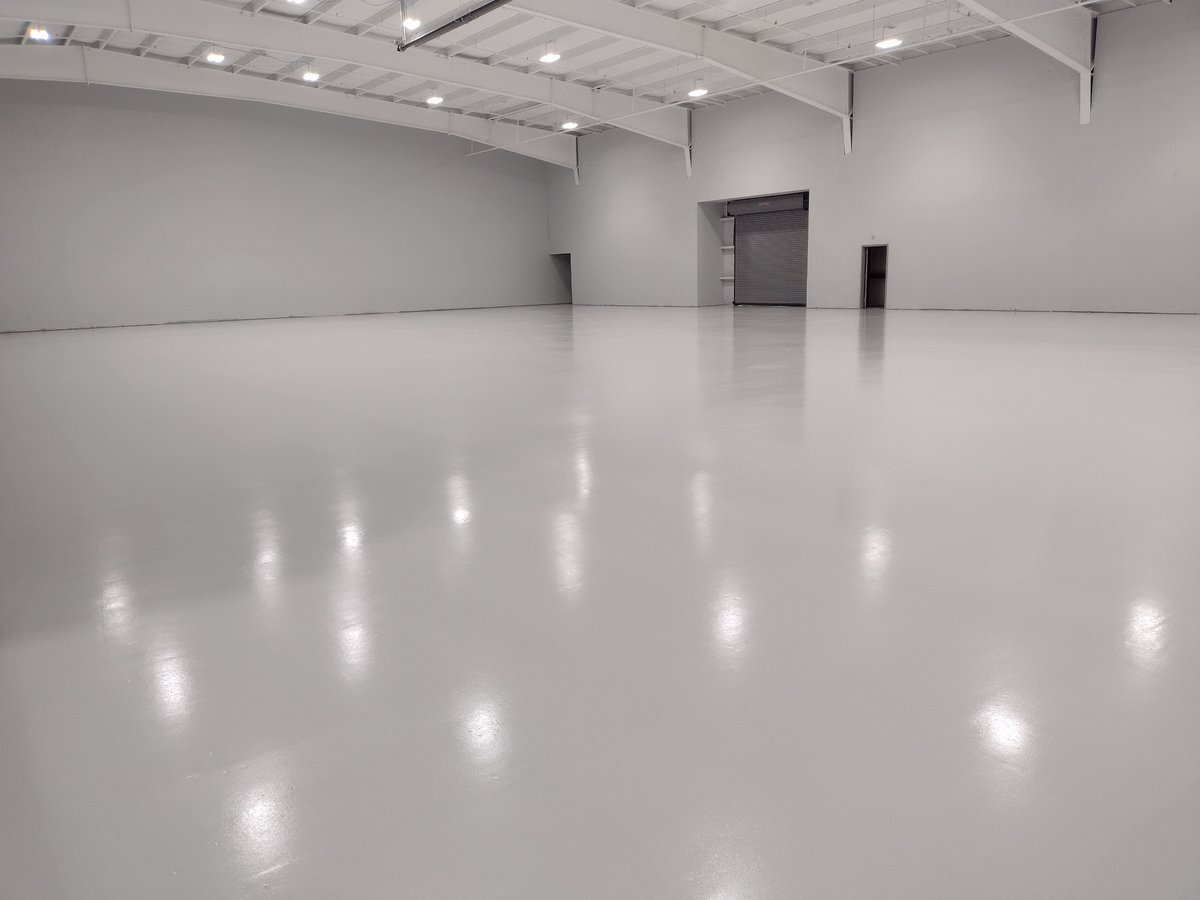
Substitutions: How Mixed Systems Get Built
Most mixed systems are not designed that way. They are created during bidding and installation, one product at a time, when a contractor proposes a faster primer, a topcoat from another line or a local patching product.
A product-level "or equal" clause makes this easy. A stronger approach accepts substitutions only as complete systems, with the same documentation required of the basis of design:
- System Description: Every layer of the proposed alternate, by function.
- Performance Data: Test results for the alternate system as assembled.
- Installer Qualification: Evidence that the installer is approved for the alternate system.
- Warranty: A system warranty equal to the one specified.
Under this approach, a request to change one layer is treated as a request to change the system. Manufacturer literature is the quickest check, since floor coating data sheets typically list the primers and topcoats each product is designed to work with.
Owner Benefits: Accountability Now and Compatibility Later
The most direct benefit to owners is accountability. When one manufacturer supplies the system and one approved installer applies it, there is one place to go if something goes wrong, and fewer opportunities for each party to point at another.
There is also a long-term benefit. When record documents identify a specific system, the facility knows what is on the floor, what it can be recoated with and what preparation is needed. A floor built from mixed products leaves the next project team guessing.
Tnemec Flooring Systems: Defined Assemblies From One Source
Tnemec publishes its flooring as defined systems that list the primer, base or body coats with quartz or flake broadcast, grout coat, finish coat and optional cove base. Its flooring guide asks that systems be reviewed with a Tnemec representative before final selection.
Products used across those systems include Tnemec Series N222 Deco-Tread, a Modified Polyamine Epoxy that Tnemec lists for use as a primer, broadcast coat, grout coat and topcoat. Tnemec Series N242 Ultra-Tread S is a Polyurethane Modified Concrete topping, and Tnemec Series 256 ExcellaThane is a Modified Aliphatic Polyaspartic finish coat.
Each product page lists the primers and topcoats the product is designed to work with.
Conclusion
A single-source system specification, backed by system-level test data, a full-thickness mockup, a qualified installer and a single warranty, keeps the interfaces between layers under one manufacturer's responsibility. We recommend treating any substitution as a change to the whole system.
Specify the floor, not the products.
Field Verification Before Specifying
The following conditions are to be confirmed in the field with the applicable test before a system is finalized:
- Concrete moisture before priming: ASTM F2170 in-situ relative humidity and, where specified, ASTM F1869
- Surface profile after preparation: ICRI 310.2R CSP chips, to the manufacturer's stated requirement
- Mockup adhesion: pull-off testing per ASTM D7234 (or D4541 as specified), with failure mode recorded
- Delivered materials: confirm product labels and batch numbers match the approved system submittal
We are happy to help. Contact a High Performance Coating Consultant in your region to review your project conditions and specification.
Urethane Cement Mixing Mistakes That Ruin Good...
Most urethane cement floor defects begin at the...
Repairing Existing Quarry Tile Floors with...
A failing quarry tile floor is not always a...
Broadcast Flake Floors: Installation Tips for a...
A consistent broadcast flake finish depends on an...